Near the end of my most recent time in therapy for OCD, I had made a lot of progress, but I wasn’t convinced that it would stick. This was my third time going through a big process of cutting out compulsions, and I hadn’t made any special breakthroughs. So why should I assume that I wouldn’t end up struggling again? It had already happened twice.
During one of my sessions, I decided to bring up this topic with my psychologist. I said something like: “Every time I cut out a set of compulsions, sooner or later, I develop a new set of compulsions. I’ve cut out a lot of compulsions during my time in this program, but I’m worried that they will eventually be replaced with new ones. Maybe even worse ones. Why does this always happen? Is there any way to stop this pattern?”
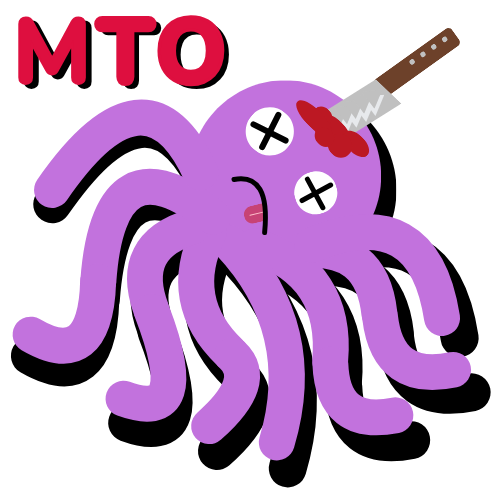
My psychologist then shared a metaphor that struck me as very insightful. It went something like this: “Imagine your OCD as an octopus that lives on top of your head. It reaches down with its tentacles and wraps around different parts of your body. One tentacle wraps around your left arm. One wraps around your torso. One reaches all the way down and wraps around your ankle. Another is around your neck. You can twist and pull at the tentacle around your neck and wrench it away, and the octopus might recoil in pain and lose its balance, but then it can take that tentacle and wrap it around another part of your body. Perhaps your other arm.”
This metaphor resonated with me because I thought that it formed an accurate picture of the pattern I was describing. However, I don’t think my psychologist shared anything profoundly useful in the way of ending this pattern. I vaguely remember that she (maybe) concluded by saying something like: “You just have to keep twisting and pulling the arms away whenever they take hold of you.”
This solution fits with what she and my other psychologist had told me previously when I’d asked if I could ever stop having OCD: “No, probably not. You can manage it, and you can get better at managing it, but you will probably always have it.”
This answer had caused me a lot of distress, and of course it had, because I was suffering and I wanted my suffering to end. In my mind, they were basically telling me that I’d have to suffer for my whole life.
When that stint in therapy ended, it wasn’t really my choice, since the program I’d been in was designed to have a limited run. I left believing that I would need to find further help with managing my mental illness, maybe forever. I didn’t have any awareness that I might be able to recover from it instead.
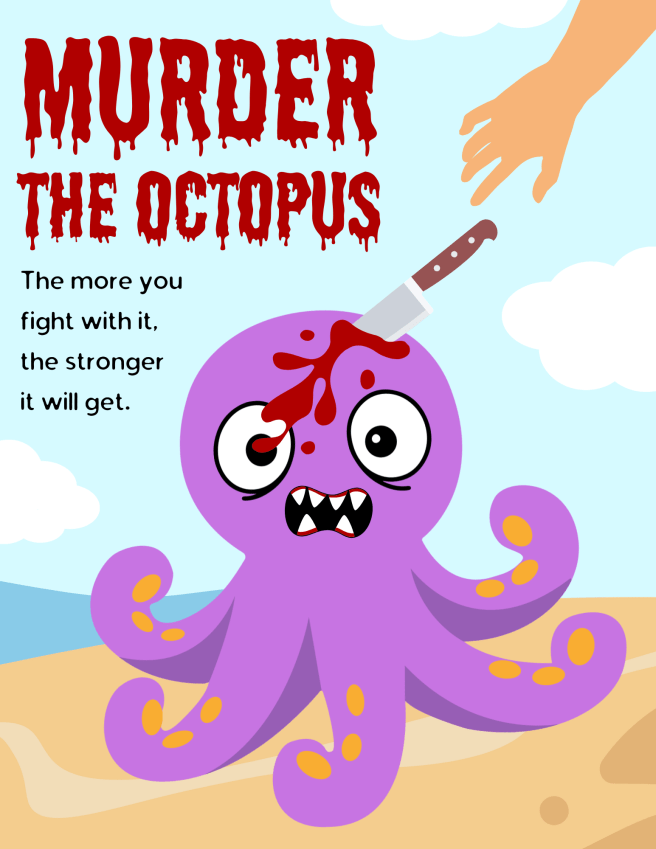
Fast forward to January 2025, almost two years after I stopped going to therapy. I remembered the octopus metaphor again, and the solution to the problem was obvious: Murder the octopus!
Why? Well, you don’t have to keep pulling away its tentacles if it’s a lifeless corpse. If each tentacle represents a set of compulsions, and we pull away one tentacle, the OCD as a whole is still alive and well. You still have your other sets of compulsions. Plus, you still have the beliefs, judgments, fears, and everything else that the octopus is whispering in your ear to convince you it’s your friend—and that it should, for your safety, continue living atop your skull.
My point is this: I believe that we need to be thorough with our mental health. We can try to stop doing certain sets of compulsions that cause us lots of problems, and we may succeed, but we need to take a broader look at all of our compulsions and get rid of as many as possible. Even better, we need to get rid of them and the octopus brain controlling them. They’re all connected, and they’re all part of the same organism.
The approach needs to be as complete as possible, even if we like some of our sets of compulsions. If we want to end the problems caused by the octopus, we can’t be friends with it anymore. We can’t let it hug us anymore. We can’t let it pull our hand away from hot stoves anymore. Because if we let it do those things, it will inevitably pull our hand away from the doorknob when we want to go out. It will start choking us when we want to speak our mind. So we have to murder it.
But I’m not saying that the approach should be hateful, and I’m not saying that it should be a one-step process. If you attack the octopus in anger and you don’t kill it on your first attempt, well, maybe you’ll injure it if you’re lucky. But you’ll surely infuriate it, and it will surely tighten its grip. And with that result, who’s to say that the octopus wasn’t the mastermind behind this whole failed plot?
I think that most people would find more success with a gradual approach. Maybe you could murder the octopus over the course of several months or years, with a small dose of poison in its dinner each night. Or maybe you could use a knife to cut off one of its tentacles each week, until it’s just a helpless bleeding head that you can chuck into the sea to be eaten by a shark.
In any case, the answer is murder. If you wrestle the tentacles away, like in the original metaphor, you’re just fighting the octopus. That’s not a permanent solution. The octopus will keep finding new and better ways of wrapping its tentacles around you, in even more inconvenient places. But it’s worse than that. If you keep fighting the octopus, you might get stronger, but the octopus will fight back and it will also keep getting stronger.
With all of that being said, you might be wondering how I went from being given the original octopus metaphor to later extending it in the way I’ve laid out for you here. The answer ties back in with my personal journey.
When my therapy ended, as mentioned, I thought I needed more help. I wanted to keep fighting my OCD—wrestling away the remaining tentacles and keeping the others at bay—but I didn’t want to try to do it by myself. I knew better by this time than to try and maintain my mental health alone, because I’d failed on multiple occasions. The octopus had always wrapped its tentacles back around me in new and more constricting ways.
In addition, toward the end of my therapy, I’d started supplementing it with some YouTube videos I’d found about working on OCD. These videos weren’t the greatest, but I believe they fed the YouTube algorithm enough that it decided to give me something amazing: a YouTube Short from Mark Freeman.
For anyone reading this who isn’t already familiar with Mark, let me tell you this: If you’ve found anything useful here, you will find much more useful content on his YouTube channel. My best advice to you, if you want to murder the octopus, is to watch his videos and read his book. His book is called You Are Not a Rock in some places and The Mind Workout in other places.
Anyway, I subscribed to Mark immediately upon watching that first Short, and I soon went on a journey with his videos and book. I learned that recovery was something that existed, and that recovering was something that I could do, and I started working on my mental health in a whole new way based on the concepts and techniques I learned from him.
Over time, I cut out more and more compulsions and I kept building and building my “mental fitness” (as Mark would say). I didn’t murder the octopus with one smooth strike. I’ve been doing it slowly with love and poison. I’ve prepared many delicious dinners that I’ve shared with my octopus, and I’ve gotten good at brewing potent poisons with which to season my octopus’s dish.
These days, I consider myself recovered from OCD—and a couple other ‘disorders’ that involved compulsions. I’m not saying I don’t do compulsions anymore (like Mark, I have a broad definition of what they are), but I don’t believe I need to be perfect to be recovered. Perfectionism is just a fancy set of compulsions, anyway.
In my view, compulsions are a part of life for everyone. They are, essentially, just a reactive way of operating. When we feel a mosquito biting us and we immediately slap it away, that’s a compulsion. But I’m not saying we should change that. We can certainly change the way we act overall, but trying to clean away every last itty-bitty compulsion is . . . well . . . a compulsion.
Trying to “solve” the “problem” of compulsions in the same way that you’ve been solving other problems is just a new way of practicing compulsions. Instead, it may be useful to revise your overall approach to solving problems—or even what you consider “solving” and what you consider “problems.”
For my part, I’d say that my octopus is still alive, but it’s not OCD or GAD or MDD anymore. It’s very sick and weak, and it only has a couple tentacles left. The rest have shriveled up and turned gray. Still, I’m often practicing my knife skills so that I can make better and better dinners for myself and my octopus. Maybe one day it will enter its final food coma. Or maybe one day I will finally stab it through the eye.
If you choose a similar approach to murdering your octopus, it might take a while. You might start wondering if you can do anything fun while the octopus is dying. Well, the answer is yes! Absolutely. You don’t have to wait around for the funeral. You can learn to surf, build beautiful sandcastles, adopt a crab, or leave the beach and go somewhere new.
A huge part of getting over mental illness is doing what we want to do with our lives, instead of letting the octopus keep twisting our arms and pulling back on our legs. By living our lives the way we want to, despite the interference from the octopus, we can slowly get stronger than it, which will make it easier to eventually murder.
Here’s an idea: Imagine what you would do if the octopus wasn’t living on your head. . . . Then go do all of those things! You might realize at some point that you need all of your food to fuel your adventure, and you might find it convenient to let the octopus starve to death.
Thank you for reading! If you enjoyed this post, please let me know with the Like button below. Also, if you have any thoughts or questions related to this post, please feel free to leave a comment for me and I will probably reply!

 Murder the Octopus